
Summary
Amos 8
This week, as we continue our series on Amos we will reflect on the connection between abundance and sin in this prophetic book, and in our own lives.
Becoming Present to God
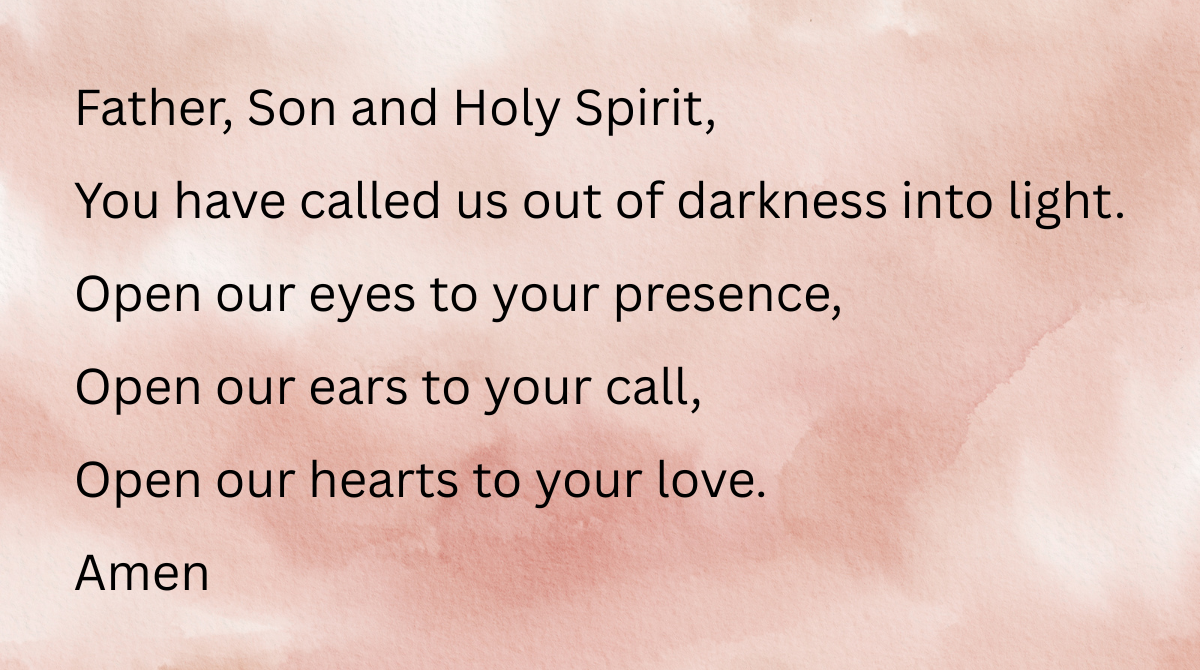
Light a candle, take some deep breaths, or sing a song, to draw your attention to God’s presence. Say this prayer together or read it to yourself.
Becoming Present to One Another
Share with one another: Where in your life are you experiencing abundance? What feels scarce in your life right now?
In Conversation with the Word and Each Other
Read Scripture Together
Read aloud these verses from the beginning of Amos 8:
”This is what the sovereign Lord showed me: a basket of ripe fruit. “What do you see, Amos?” he asked.
“A basket of ripe fruit,” I answered.
Before reading further in your Bibles or consulting google, sit with the image and share with one another your impressions and associations with this image. There are no wrong answers! One image can mean many things. Take wild guesses as to what this prophetic vision might symbolize for its original audience (Israel), and also for you individually, for us corporately.
Watch Video
Read Scripture Again
Re-read these passages Kim referenced that describe the sins of Israel
Amos 8:4-6
Hear this, you who trample the needy
and do away with the poor of the land,
saying,
‘When will the New Moon be over
that we may sell grain,
and the Sabbath be ended
that we may market wheat?’–
skimping on the measure,
boosting the price
and cheating with dishonest scales,
buying the poor with silver
and the needy for a pair of sandals,
selling even the sweepings with the wheat.
Amos 2:7
They sell the innocent for silver,
and the needy for a pair of sandals.
They trample on the heads of the poor
as on the dust of the ground
and deny justice to the oppressed.
Amos 5:11
You levy a straw tax on the poor
and impose a tax on their grain.
Therefore, though you have built stone mansions,
you will not live in them;
though you have planted lush vineyards,
you will not drink their wine.
Amos 6:4-6
You lie on beds adorned with ivory
and lounge on your couches.
You dine on choice lambs
and fattened calves…
You drink wine by the bowlful
and use the finest lotions,
but you do not grieve over the ruin of Joseph.
7 Therefore you will be among the first to go into exile;
your feasting and lounging will end.
Discuss Together
(Choose any or all)
How do your initial associations with the prophetic image relate to what you have since learned about Amos’ vision of the summer/ripe fruit?
How do you see the “market economy” depicted in these verses you read?
Where do you see abundance alongside scarcity in these verses?
Who are the “Josephs” in your community, in our wider world?
In “The Serviceberry”, Robin Wall Kimmerer describes the legendary “Wendigo”. Originating in First Nations’ folklore, this monster is said to suffer from the illness of taking too much and sharing too little. Where/Who is Wendigo in our world?
Earlier this fall we studied Deuteronomy 6:4, which could be translated “...love God with all your heart, soul, and abundance. What might it look like for you, for your small church, for our church to love God (and neighbour) with our abundance?
Blessing
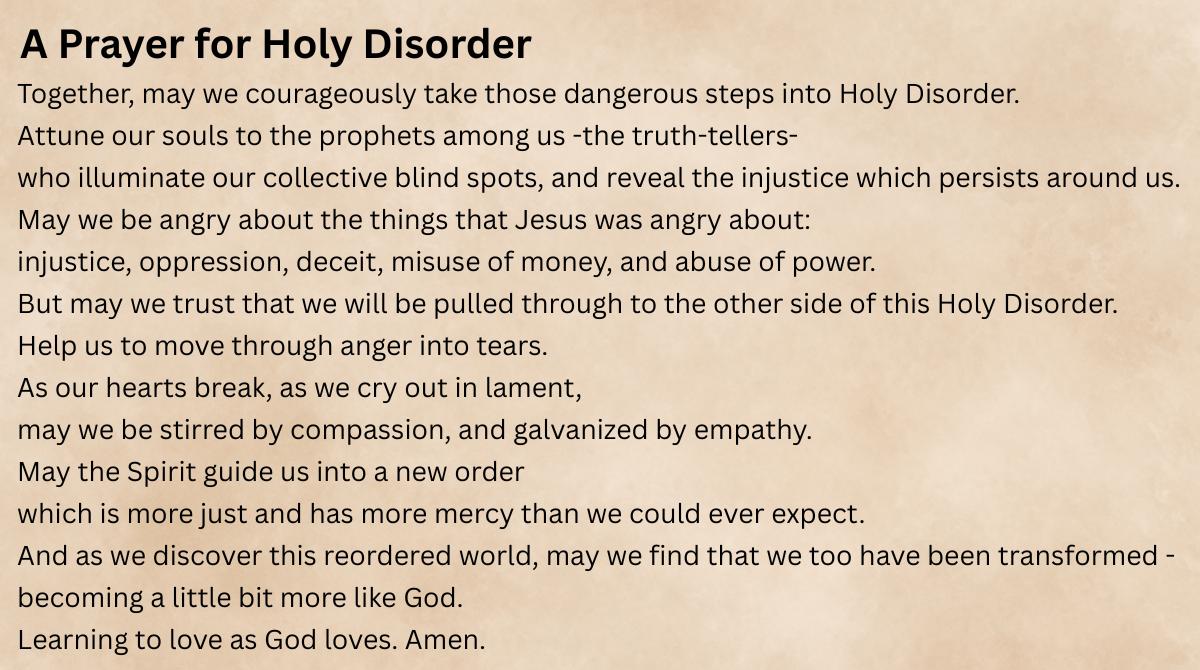
Close with someone reading the blessing over you all as the candle is blown out.

The Law Part 1: God Reshapes the People
Lesson Highlights: The starting place for understanding the law is relationship. It is a reflection of a relationship between Yahweh God and the newly freed and reshaping Israel, all oriented around the purpose of loving one another. In our story then, we don’t talk much about specific refrains, but rather save that for the wonder time.
Before you begin:
Helpful Context for Adults: Understanding the Law
Before Small Church, please take a few minutes to read the background information that is at the bottom of this page. It is adapted from a blog post written by Meredith Ann Miller.
Documents for Printing
You will need to print this PDF to complete the Wonder Questions:
You will also need to print this PDF for the Activity (one per family):
Check In Question
(Pick one or two)
What is a rule you follow in your life that you think is helpful or important to you?
What is a rule that is difficult for you to follow? Why is it difficult to follow?
Tell us a story of getting in trouble as a child? How did you feel with the response/punishment? Did you learn anything from the experience? (Adults)
Bible Story
After God freed the people from enslavement in Egypt, they began a new chapter in their story together. You might title the chapter “learning to live together” or “how to become a group now that we’re free”. Ok, these aren’t very catchy titles, and maybe you can come up with a better one after you hear more of the story, but the point is the same: now that they were free, how could they live together in ways that matched who Yahweh their God was? Life together could be so different than Egypt. It could be so much better than Egypt, mainly because Yahweh God was so different from the other gods, so much better than the other gods.
Not only that, but their life together could work in ways that showed the world what Yahweh God was like. They could be like stars that shone out, glittering and lovely, inviting others to stop and notice the light. God led the people through the wilderness to the mountains, where they set up camp. Their leader Moses climbed the mountains, and the BIble says God’s presence was like a thick cloud.
God said to Moses, “You’ve seen all I’ve done–how I freed you and you flew from Egypt like you were riding on an eagle, brought to a safe nest with me. Now, I want you all to be my people, and I’ll be your God. You all will be like treasure to me, so special, so dear. And your lives as a group will be special, too.”
Then God gave Moses guidelines, teaching and rules for the people. Together they are often called “The Law”, but they don’t work like laws do nowadays. In fact, we’re going to call it “Life Together Teaching”. Because that was the point–life together as God’s super-loved people.
There are 3 books in the Bible full of details about their Life Together Teaching, so now let’s read them all, mmmkay? Just kidding! Here’s what you really need to know about them. They can be summed up like this:
Love Yahweh your God. Love each other.
You may feel like, that’s it? If that’s all, why are there 3 whole books of details?
The details help for the times when people don’t. When they don’t love God. When they don’t love each other.
Like, say, what if someone doesn’t take care of their ox, and then their ox gets loose and hurts someone? Or what if a stone is marking the edge of somebody’s land and then they decide they want more land, so they move the stone into their neighbors land to make their own land bigger? Or what if someone from another land comes to live here and after your field of food has been picked they want to walk through to grab leftovers and fallen bits but the field owner wants to send workers back in to pick up every last crumb?
What then, hmmmm?
These detailed books of Life Together Teachings came together to help them agree on how they could respond to these situations–and so many others–in ways that would match up with who God is and being God’s people. They were the ways that this group would love God and love each other in their time and place and community.
And while we may not have to think about our ox, or the rocks that mark off the edge of land, or our harvest plans, we do get to ask: how might we love God and love others in our time and place?
Wonder Questions
Instead of wonder questions, we have a wonder activity that invites you to look at up to three Old Testament laws specifically.
Split into small groups of multi-generations and each discuss the questions below for one of the laws in the printed PDF from above.
Note: the first option is most accessible, the final one is most challenging, so you can select what fits the kids you are with.
Once your groups have had a chance to discuss, take a moment to each share what you discovered in your small groups.
For each, you are basically exploring together:
I wonder why this law mattered?
I wonder who or what it protected?
I wonder what a law like that would sound like for our time and place?
KEY QUESTION:
Every Bible story (even these little ones) tells us at least one thing about who God is or what God is like. What did you notice this time?
Activity
Family Faith Culture Reflection and Craft
Complete this activity to help answer: How can the Law impact our lives today? If the law is to help us love one another what are some ways your family is or could practice this?
Use the printed PDF from above to complete this activity.
End the activity by sharing some of the ideas you came up with, with the rest of your small church. Take them home and hang them in a central place in your home as a reminder.
Body Prayer
Deuteronomy 6:4 says, Listen, O Israel! Yahweh is our God, Yahweh alone. And you must love Yahweh your God with all your heart, all your soul, and all your strength.
We are going to pray with our bodies, asking God to grow that kind of love in us. We’ll say, “God, may we love you with all our heart, all our soul, and all our strength.” And we’ll pick a movement for each part.
Select a movement for each of the four parts, then pray and move together 2 times. If your kids wouldn’t want to make up the moves, try: hug yourself // point to your heart // hands on your tummy // muscle arms.
Pray:
May we love you // with all our heart// all our soul// and all our strength. Repeat.
Benediction
May God give you space and time
to think about the season you are in,
creativity and wisdom as you think about
what you would like to do next,
and courage and peace as you make it fit
your actual kid,
your actual family,
your actual life.
AMEN.
Background Information for Adults:
Three Things the Law Is (and Is Not)
1. The Law is about becoming a community that reflects God's character. It is not about individuals simply knowing how to be good.
This becomes clearer when we look at the Law in its literary context and read it as part of the overarching story of Scripture. There isn't a separate section of the Bible that is simply "The Law."
Let's start with a little Hebrew.
The Hebrew word translated as "Law" is Torah. If you asked a Jewish person which part of the Hebrew Scriptures is the Torah, they would point to the first five books of the Bible, what we sometimes call the Pentateuch.
From a Jewish perspective, the whole story of Genesis through Deuteronomy is Torah. What we often refer to as "the Law" is actually embedded within this larger story. This is why some scholars suggest that "Teaching" or "Instruction" might be better English translations of Torah, moving away from the purely rule-based connotations of the word "Law."
When we consider the larger story, we begin to see its purpose.
Let's review the story so far:
The people of Israel have been freed from slavery in Egypt by a God who is, to them at least, largely unknown: Yahweh. Yahweh overpowers the most powerful gods and empire in the world and leads the people through the waters to freedom. This is a symbolic new birth, marking the beginning of a new family and a new people of God.
God then provides food and water for the people in the wilderness and leads them to Mount Sinai.
In other words, God has demonstrated that they can be trusted to protect and provide for the people, bringing them life as a good God should. But this is a God the people have not known for generations.
The people would naturally be wondering:
What is this God like?
What does it mean to be the people of Yahweh, rather than the people of the gods of Egypt?
How should we live together in light of everything that has happened?
What does Yahweh expect of us?
This is why the Law, beginning with the Ten Commandments, is the very next thing that happens.
It is like the founding charter or constitution of the people of Israel. It answers the question: What should the people of Yahweh look like?
Individual actions and decisions certainly matter, but the larger focus is on becoming a community that reflects the character of Yahweh. A family whose life together shows the world what this God is like.
This is why Jesus can say that the Law is summed up in loving God and loving our neighbour. It isn't that the individual laws are unimportant. Rather, they are specific examples of what it means to love and represent this God in everyday life.
2. The Law is contextual, set in a particular time, place, and culture. It is not timeless.
You may have noticed that Jesus sometimes approaches the Law quite differently from the way it is presented in Exodus or Deuteronomy.
Sometimes his approach seems more gracious, such as when he responds to the woman caught in adultery. At other times, his teaching seems more demanding, such as when he challenges the reasons for divorce that the Law had permitted.
Even Deuteronomy, which repeats the Law just before the people enter the Promised Land, sometimes presents things differently than Exodus, written just a few books earlier.
If we understand the Law as timeless rules meant to apply identically in every time and place, these differences can be confusing. But they make more sense when we understand the Law as contextual.
The chapters we call "The Law" are intended to show what it would mean to be a community that reflects God's character in that particular time, place, and culture.
That will inevitably look different, sometimes very different, from what it means to reflect God's character in our own time and culture.
Not because God's character has changed, but because our cultural context has changed. The ways we live out God's character should respond to that context.
The scholar Christopher Wright offers a helpful framework for understanding how to read the Law well. His approach was valuable not only to Meredith and Curtis, but also to their church community.
In his commentary on Exodus, Wright explains that the laws found in Exodus 21–23 and elsewhere in the Old Testament:
"Embody a vision of the kind of society God wanted Israel to be in their own historical and cultural context. So, if we can discern the motivation, purpose, and values that drove such guidelines for living back then, we can then begin to articulate broad principles and relevant application in other contexts such as our own."
He offers some helpful questions to guide our reading:
First, consider the original context:
What was the objective of this law?
What kind of situation was it trying to prevent or promote?
What kind of people would have benefited from or been protected by this law?
What kind of people would have been restrained by this law?
What motivations were there for obeying this law, either explicitly in the text or implied in the story of salvation?
What values, norms, or principles are embodied in this law?
Then, step out of the Old Testament context and consider our own world:
What kinds of situations or people in our society could be considered comparable to those described in these Old Testament laws?
What should our objectives be in responding to these situations and people?
How should the principles found in Old Testament laws be applied in practical life today—in my own life, in the church, and in wider society?
Adapted from The Story of God Bible Commentary – Exodus, by Christopher Wright, copyright 2021, Zondervan Academic.
3. The Law provides guidelines to help the community think for themselves. It does not provide rules to be unquestioningly followed.
This brings us to the third point: understanding the Law more as guidelines than as rules.
The word "Law" can lead us to think of these chapters as a collection of ironclad rules that must be followed, much like how we think about laws today. We aren't generally expected to think deeply about the laws of our state; we're expected to follow them.
But many scholars don't believe this is how the Law would originally have been understood.
Christopher Wright explains that:
"Ancient Near Eastern lists of laws and cases functioned more as collections of legal wisdom, lists that would provide paradigmatic illustrations of what justice should look like, guidelines that would educate and assist judges" in carrying out their responsibilities (Wright, Exodus, p. 387).
These were examples of justice that were always intended to be built upon and developed.
This means we can read and use the Law in much the same way it was originally intended. As Christopher Wright puts it, we can:
"Allow them to shape our overall orientation to God, our neighbors, and the wide range of life" (Wright, Exodus, p. 427).
By seeing God's character reflected in the Law, we can use it to help us think for ourselves about what it means to reflect God's character in our everyday lives, even when our context is so different from that of Exodus.
Bringing It All Together
The Law is part of a larger story: a story about becoming a community that reflects God's character, in a particular cultural context, through guidelines for living together.
It is not simply a collection of rules dictating individual morality. It is not timeless, nor is it a list of instructions to follow without question.
As you know by now, our key question when exploring Scripture is:
What does this story tell us about who God is? What is God like?
In the Law, we see, among other things:
God invites.
God reshapes us, patiently and over time.
God engages with specific cultures on their terms.
God cares for the powerless.
God is active, but not controlling.
God prioritizes life over lists.
God establishes a pattern of trust first, response second.
As we explore the Law together, our invitation is to look beyond the individual instructions and discover what they reveal about God's character, God's priorities, and God's dream for how we live together as a community.
