
Amos: Holy Disorder
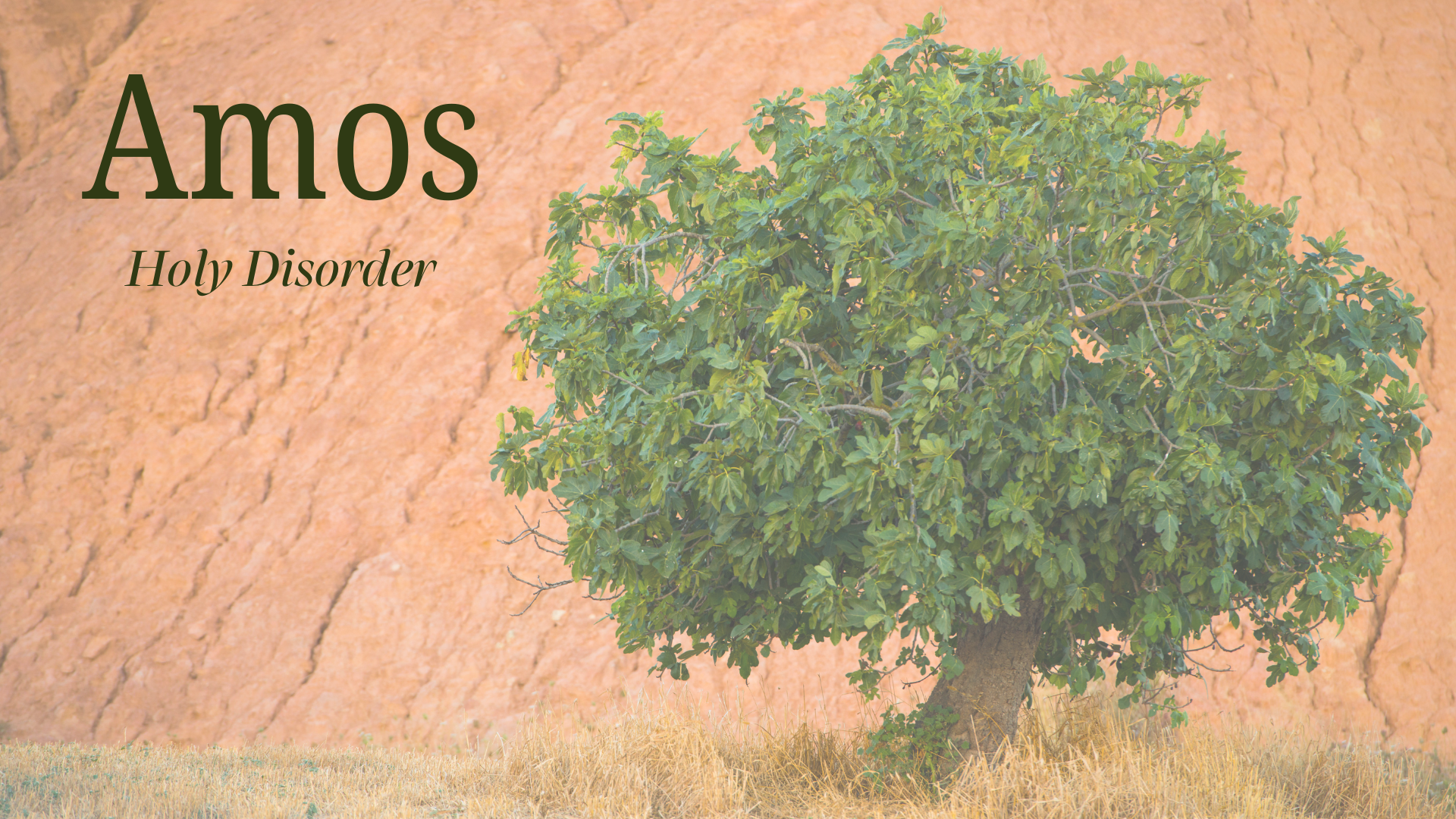
In this series we will look at the writings of Amos, a poor subsistence farmer who hears the cries of the oppressed and speaks truth to those who are benefiting from the unjust systems. Drawing on the work of Richard Rohr, we will use the lens of order - disorder - and reorder to help us understand how Amos draws the people of Israel (and us!) toward a life which is more just, more merciful, and to a greater closeness with God.
In our current climate of cultural, political, and economic disorder, adding some Holy Disorder into the mix might seem like an inadvisable venture. However, learning from an angry, truth-telling, fig farmer from 2500 years ago might just be what we need.
Holy Disorder is what helps shine a spotlight on injustices and unethical treatment of others, and lead people to a place of reorder where we learn to love as God loves. With the prophet Amos, we see that Holy Disorder is what is required for humans to grow into a posture of more justice, more mercy, and a greater closeness to God.
Below you will find a collection of resources to support our exploration in this series. These have been selected by the pastoral team to both help guide their teaching and deepen our community’s understanding. As the series progresses we will update this page with recordings of the teachings, and may add more resources as we go along.
Setting the Stage: Background to Amos
Around 760 BCE, in a time of great prosperity and expanding territory, the people of Israel are awaiting the time when the Lord will come and intervene, destroying their enemies, and rewarding them for their place as the chosen people. However, they have neglected their own ethical responsibilities; they have trampled over the poor and taken advantage of the marginalized. The Northern Kingdom of Israel is blind to their own collective sin, and so God calls up a poor subsistence farmer, Amos, from a small town in the Southern Kingdom of Judah to speak truth into the situation. Amos arrives to tell Israel that the time of the Lord intervening is happening now, but not how they expect. Amos tells them that Israel does not get special status. As they have ignored the Lord’s call for justice and righteousness, and they will be punished, rather than rewarded.
Amos kicks off the timeline of prophetic writers in the Hebrew Bible. As someone who is poor, uneducated, and has to work labour to scratch out a living, he is very aware of the problems of the society, which the church and royalty have condoned and perpetuated. Through his prophecy, he - with lots of words, and in vivid detail - points out the delusions of the collective. Things are not as they should be, there are systematic problems of injustice.
Amos’s prophecy was intended to encourage disruption within the culture and society. Theologian Richard Rohr uses the term “holy disorder” to describe this disruption. This “holy disorder” in Amos follows sets up a pattern we see throughout the prophetic writings of order - disorder - reorder.
An Approach to Reading Amos
For some it can be difficult to read the book of Amos. The writing is full of anger and rage, with Amos describing in detail how the Lord is going to bring destruction to Israel and surrounding nations. Is this the Lord’s wrathful anger? Or are these words Amos’s rage? It can be confusing to tease out which parts are the prophet Amos’s anger at the situation, and which parts are revealing God’s heart. When we use the idea of “holy disorder” we can trace the movement of order - disorder - reorder through Amos’s writing. Then, as readers, we are invited to join in with Amos’s journey from deconstruction to reconstruction.
In the book of Amos, we see that he is angry at the injustices and evils in Israel, and while his lecture is long, he doesn’t stay in the anger, or dismiss his own responsibility. He might start out a bit judgy and with a superiority complex, but as the writing continues, we get to watch this outlook fall apart. Amos cannot stay in his anger, he moves toward tears. As Rohr puts it, the prophets “move from anger and judgementalism to a reordered awareness in which they become more like God: more patient like God, more forgiving like God, more loving like God.” (Rohr, pg xvii).
Amos turns the anger into tears. He laments the unjust situation and doesn’t lose sight of the humanity of each person involved. His tears which flow out from this situation helps move him toward a new way of being. Amos deconstructs and reconstructs, and we move through this process with him to find God is revealing what it truly means to love the other.
Resources
Books
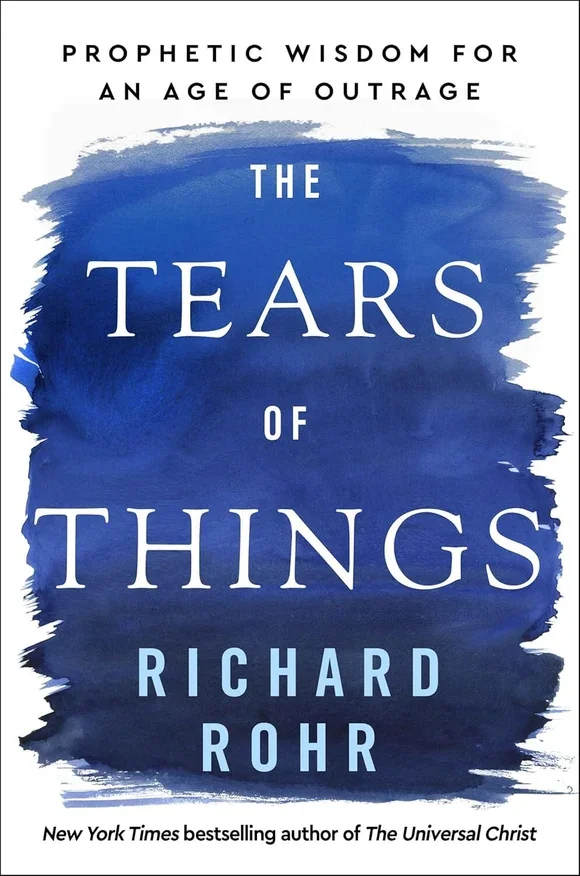
By Richard Rohr
In Father Richard Rohr’s newest book, he explores the wisdom of the Hebrew prophets. The framework of order-disorder-reorder is introduced in the introduction and is traced through several different prophets. While the whole book is encouraging and thought-provoking, the chapter on Amos is of particular interest for our series.
For additional resources you can take a look at the website for the book.
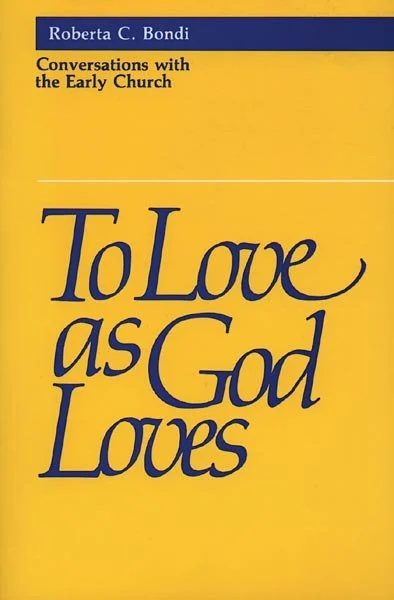
By Roberta C. Bondi
This book is our reading companion during our series. While the book is not about Amos, the themes runs parallel to our series, and will provide discussion for what love of God and love of the other looks like in practice.
In this short book Roberta Bondi offers insights from early church figures to help new ways to understand what it means to be a human being made in the image of God. Although the early teachers were from a very different time, place, and culture from us, many of the problems they faced are similar to the ones we face today.
Podcasts
The podcast Everything Belongs is hosted by the Center for Action and Contemplation and journeys through the teachings of Richard Rohr. Season 3 explores the book, The Tears of Things, featuring interviews with Richard Rohr and other theologians. The following episodes are particularly helpful for understanding the book of Amos:
Teaching and Reading Schedule for Amos Series
October 4, 2026 | Amos 5:18-24
October 11, 2026 |
October 18, 2026 | Amos 4
November 1, 2026 | Amos 7:1-9
November 8, 2026 |
November 15, 2026 | Amos 9:11-15
November 22, 2026 |